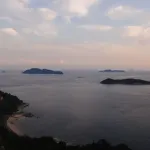

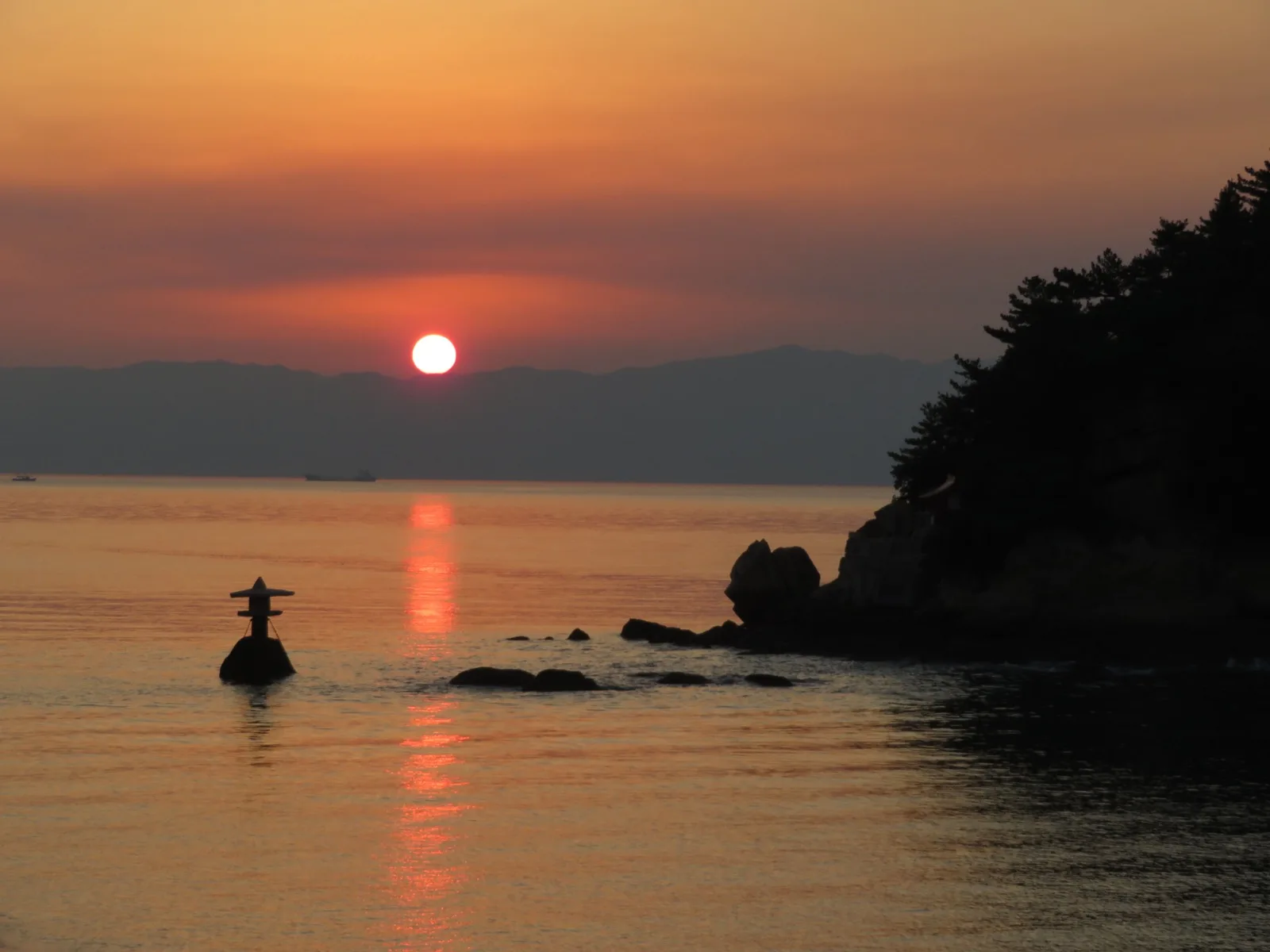
The Seto Inland Sea is the gem of Japan’s coastal waters. Some of the best islands to visit are just off the coast of Okayama Prefecture where secluded areas have been cut off from the mainland for hundreds of years. The discerning traveler can bask in island views, witness rare traditions, take part in ancient festivals, and hob-knob with the locals, all while being the only foreigner present!
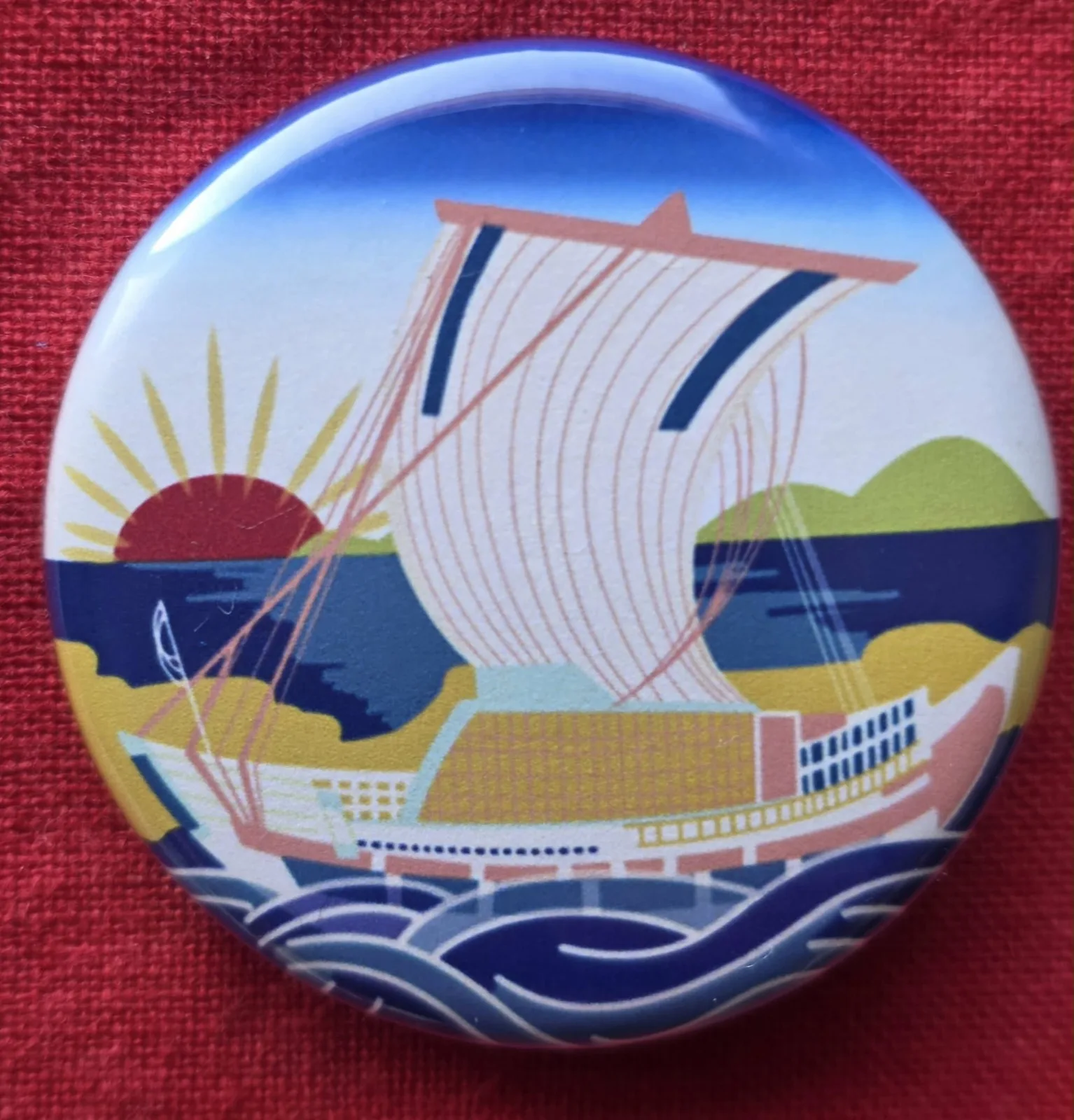
First, a bit of background. Snuggled between three of Japan’s four main islands—Honshu, Kyushu and Shikoku—the protected Seto Inland Sea has a long history of maritime activity. During the Sengoku period, the clusters of islands with narrow channels between them made the location a hotbed for pirates. In the Edo period, when Japan was closed to most of the Western world, these waters thrived as a domestic trade route for goods such as salt, sake and rice. Shallow-drafted, square-sailed trade ships called kitamaebune visited various ports along the archipelago to sell and barter their wares in exchange for local products. These boats constantly circled the main island of Honshu, each circuit passing through the protected Inland Sea.
These domestic trading vessels had another advantage: They were driven by the pull of the moon. Each end of the roughly 450 km Seto Inland Sea draws in tidal currents from the Pacific Ocean—in the east via the Kii Channel near Osaka Bay, and in the west via the Bungo Channel near Kyushu—providing two mouths for the ocean waters to enter. The central area of the Inland Sea, where the opposing tidal currents meet, is near Sensuijima Island, off the coast of Tomo-no-ura in Fukuyama (Hiroshima Prefecture). The tides clash with such force, a visible line of frothing water can be seen when viewed from the mountaintop. Once they’ve met, the tides achieve stasis for an hour or two, before changing direction and heading back out into the Pacific Ocean through the same two channels. This action brings the Inland Sea to a low tide. This drawing in and out of large amounts of water is, like a bellows, the breath of the Seto Inland Sea.
The movement of tidal currents from east to west and west to east, meant the kitamebune did not need to rely solely on wind-power. Even without full sail, the tides worked their magic, nudging these Japanese trade ships up or down the Honshu coast according to the direction of the current and the pull of the moon. In this way, Japanese mariners developed an intimate reliance on nature’s gifts.
Sensuijima Island (Hiroshima Prefecture)
The shallow port of Tomo-no-ura, a delightfully preserved fishing town that oozes Edo period charm, provides a fertile spawning ground for tai fish to lay their eggs. The local fishermen feel they have been blessed with a distinct advantage, as evidenced by their large catches of this richly flavored red sea bream prized for its mild and clean sweetness. A trip to Tomonoura is a gourmand’s dream: the local specialty is served as tai-meshi (cooked with rice), sashimi (raw), nitsuke (head and bones simmered in a seasoning sauce), or as shioyaki (whole fish salted and grilled). Tai is the customary dish for auspicious occasions in Japan from weddings and births, to coming-of-age ceremonies and New Year celebrations. Tomonoura makes its own liqueur called homeishu and Gasuten Tempura, a fish paste. Fukuyama honors their breamy abundance with the Tomo-no-ura Sea Bream Netting Festival (called Tai-ami), that takes place off the coast of Sensuijima Island. Held in May to coincide with the spring madai migration and tides, the festival showcases a nearly four-century-old purse-seine fishing tradition, which should not be missed! Watch as the fisherman sing songs while navigating two large boats with twenty or so rowers on each. A large net is stretched between the two tandem vessels forming a scoop which they bring up from underneath, and cinch up the trapped fish with their collective brawn, accompanied by cheers and jubilant roars.
The Kasaoka Islands (Okayama Prefecture)
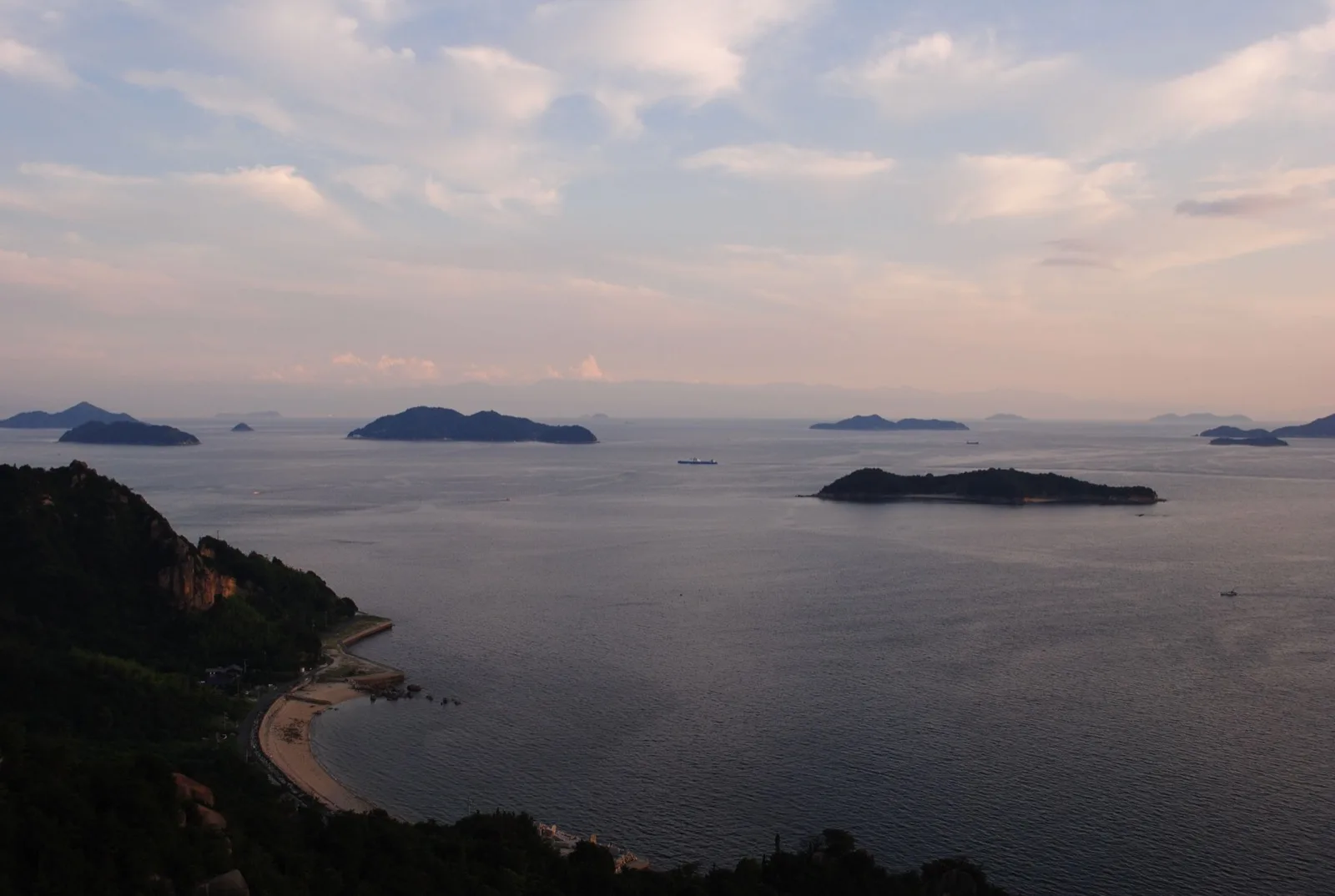
Within sight of Sensuijima is the neighboring prefecture of Okayama and a chain of seven off-the-beaten-track islands (belonging to Kasaoka City) with populations ranging from 40 to 700, and connected by ferries. For centuries, these islands were communities unto themselves. While brides passed between the islets for arranged marriages with fishermen, most locals never ventured to the other islands, allowing unique micro-cultures to develop according to their needs. On Shiraishi island, for example, the community ensured survival by entrusting children to other families for safekeeping in the event of disaster, death of a parent, illness, or poverty. The adopting family took the responsibility seriously; Even if never called upon, they readily took part in the child’s education, and advised him or her on marriage and job opportunities.
Takashima Island
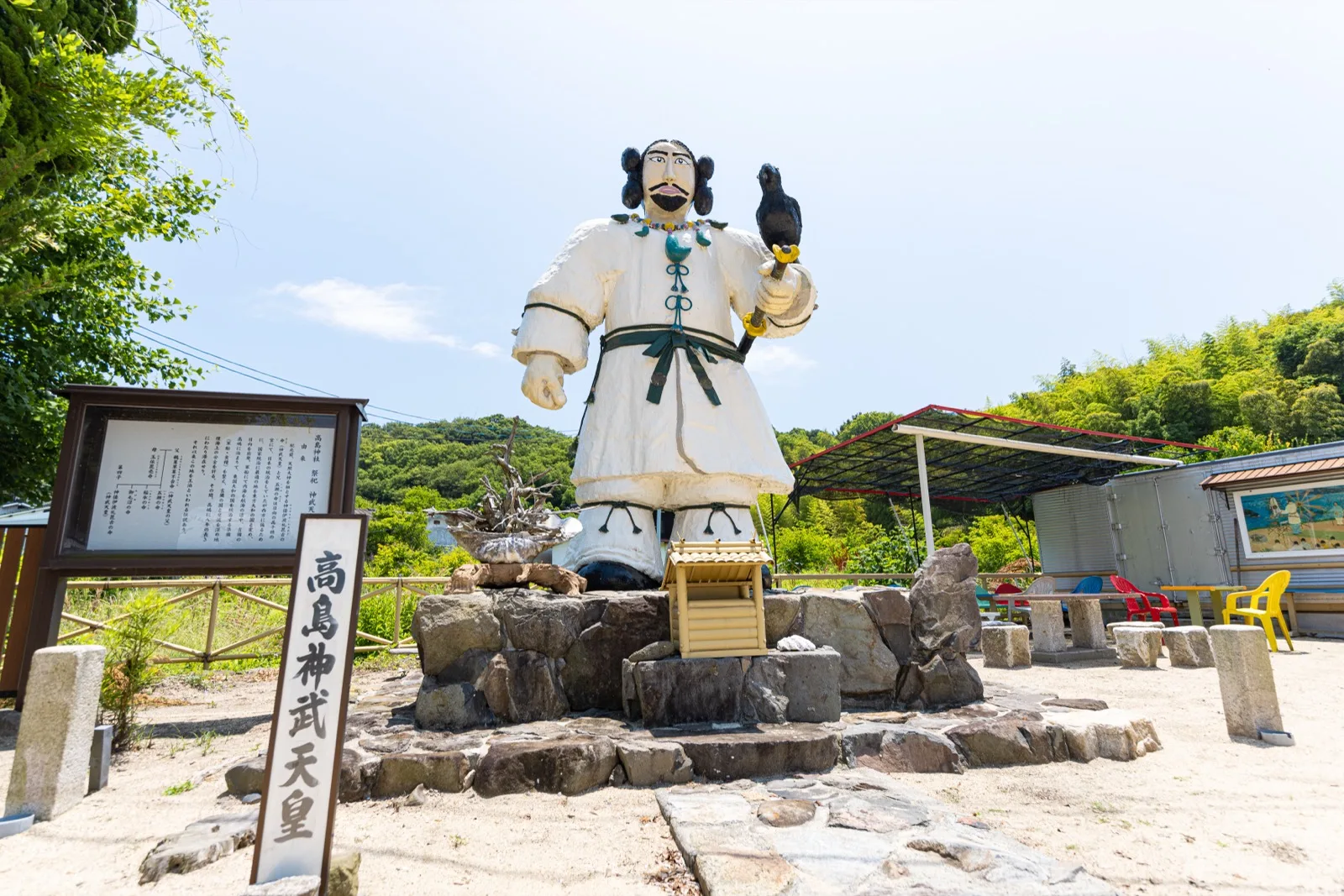
On the rocky outcrop of Takashima, the smallest of the Kasaoka Islands population-wise, the culture was shaped by Japan’s mythology and local beliefs in sacred stones. As recorded in The Kojiki—Japan’s earliest extant chronicle completed in 712 AD—the first emperor, Jimmu, passed through this area of the Inland Sea on his eastward journey in search of a land to rule from. Local tradition holds that he stayed on Takashima in a temporary palace for some time before establishing Yamato in present-day Nara. Although now considered mythical, Jimmu has left an indelible mark on the island’s history with stones marking gathering spots and places he convened with the gods. A weathered stone torii gate commemorates a visit by Emperor Meiji in 1885—to pay his respects to this small islet with mythological associations to Imperial history. The torii was perhaps hewn from the island itself, once a rock quarrying site.
Some of the large boulders that grace the peaks of the low mountains on Takashima are fertility stones bearing the shape of male and female genitalia. These were prayed to for conception, safe birth, and good conjugal relationships. These stones are still worshipped by the people today and some are considered “power spots,” where spiritual energy can be transferred to those who touch or worship the rotund boulders.
Shiraishi Island
The next ferry stop in the Kasaoka Island chain is Shiraishi. Ever since Kukai (Kobo Daishi) brought Shingon Buddhism to Japan from China in the early ninth century, Western Japan has been steeped in Shingon’s promise of enlightenment.
Shiraishi is home to a Japan Heritage site: an homage to Kobo Daishi, who is said to have come ashore there in 806 CE. While on Shiraishi, it is believed he meditated for 37 days under an overhanging rock. The site is now celebrated by a small building constructed in his honor.
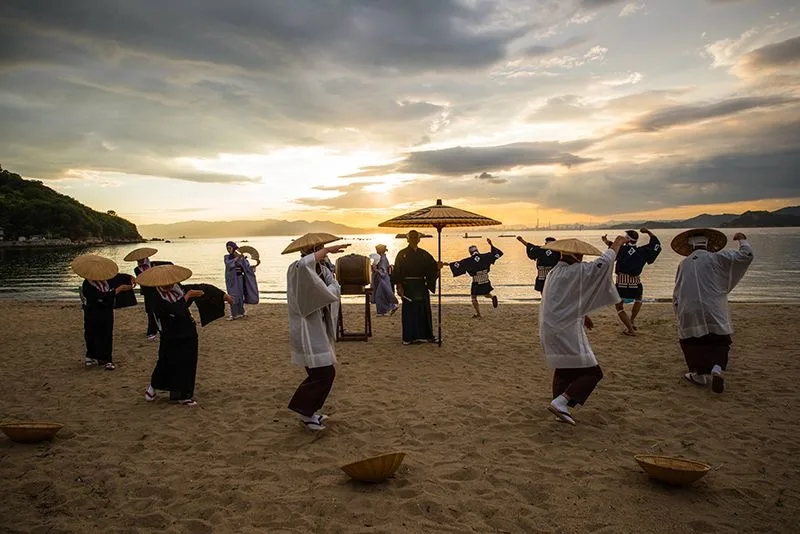
Shiraishi’s Kairyuji Temple was founded after the 12th century Battle of Mizushima, during the Genpei War that ended in 1185. It has long been believed that people who die in battle—or under violent or untimely circumstances—may return as vengeful spirits, called onryo, and bring misfortune to the living. Each year, from August 14 to 16, the Shiraishi Dance is performed during the bon Festival of the Dead to appease the souls of warriors claimed in the sea battle more than 700 years ago.
Kitagi Island
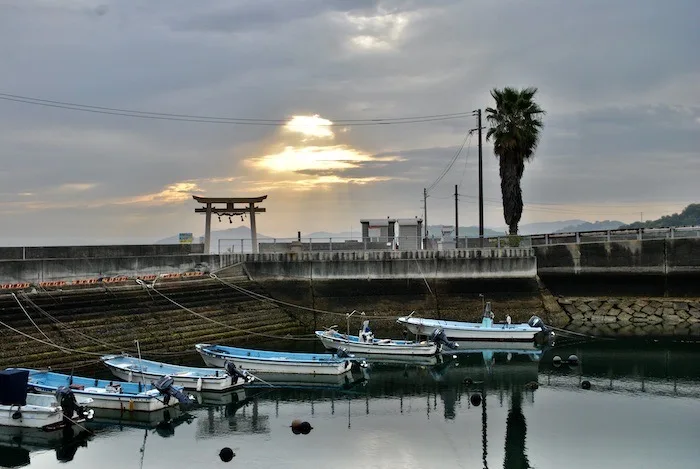
A mere 10-minute ride on the ferry boat brings one to Kitagi Island, that maintains a rare tradition in which inhabitants ward off women’s ailments by crafting miniature straw boats populated with 12 origami dolls and setting them off to sea with provisions and sweets to eat along the journey. In this Edo-period ritual, the boats are believed to carry away diseases and misfortune. This observance survives because of the isolation of the island which feeds its propensity to hold on to customs longer. This colorful ceremony is performed once a year according to the lunar calendar, falling in April or May.
Manabe Island
Back on the ferry boat, and just a stone’s throw away, is the last stop Manabe island, housing less than 100 residents. This island is the former stronghold of the Manabe Suigun: navy pirates who, in the 15th and 16th centuries, controlled the maze of narrow channels through nearby islands. As a regional maritime militia, they served under a warlord (during the Sengoku period) or a maritime lord (during the Muromachi period), and patrolled the thriving shipping routes that connected the Kyoto—Osaka area with the rest of Western Japan. They piloted merchant vessels through rushing tides, and acted as intermediaries of littoral borders. However, they also controlled the sea lanes and ambushed boats that refused to comply. For this purpose, they used fast, maneuverable kobaya boats to scout, wait, and pounce on passing ships. Tolls, ransom, protection money and “services,” such as engaging in ship-to-ship combat, served as forms of payment. In this way, the Manabe Suigun leveraged their skills in navigation and naval combat to control their patch of sea.
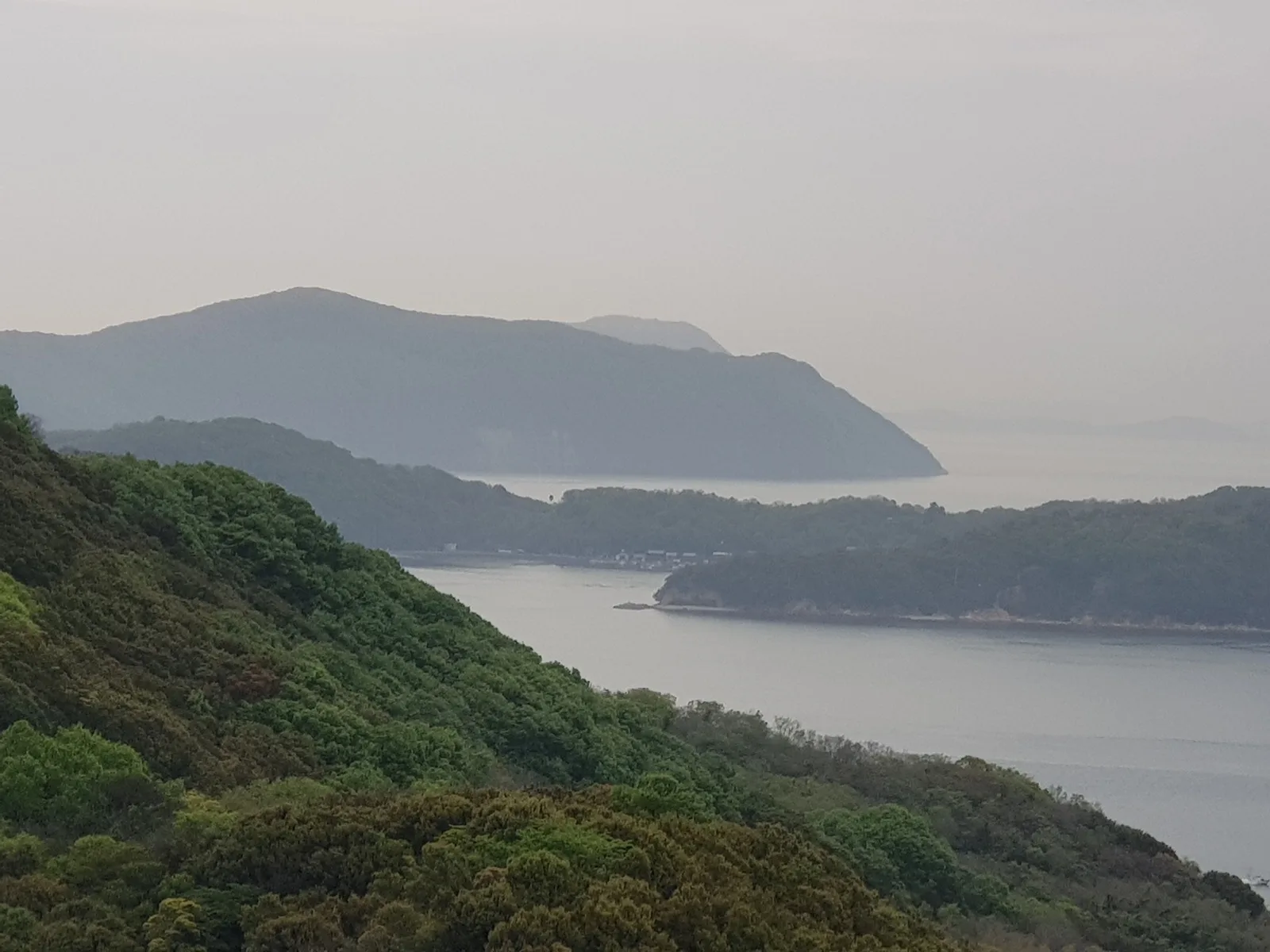
These days, cargo ships hardly give Manabe a glance as they steam past. Instead, the island has become a sought-after movie location due to its quaint, Edo-period streets and beautiful sea frontage.
Tomonoura and the Kasaoka Islands have long inspired authors, poets and movie directors. In addition to Takashima being mentioned in The Kojiki ancient chronicle of Japan, Manabeshima is the title of a Frenchman’s 3-month stay on Manabe Island, and Shiraishi Island is the subject of my own book The Widow, The Priest and The Octopus Hunter. Tomonoura was a location for the filming of the movie Wolverine (starring Hugh Jackman) and served as the inspiration for Hayao Miyazaki’s Studio Ghibli animated film Ponyo. The movie director is said to have stayed two months in Tomonoura while writing the script.