The enormous face of the Tengu looks down, menacingly with a scowl. With its red face and its big nose, it has been proposed by some that this mythological figure was inspired by the fleeting glimpses of shipwrecked Western sailors during Japan’s 250 year sakoku period, a time when the country was closed to outsiders. These days, Japan welcomes most everyone, to peruse its cities, and for the more daring, to get up into its mountains. One can most easily reach the Tengu statue by train, which stands just outside the Eizan line’s terminus at Kurama Station.
Despite Edo period legends of “tall-nosed,” sunburnt foreigners running around the hillsides, Kurama had been already been associated with the Tengu for centuries. The mountain was thought to be the home of Sōjōbō, King of the Tengu, who from the year 1170 onward taught swordsmanship to the young exile, Minamoto no Yoshitsune, one of Japan’s most beloved folk heroes.
The Tengu themselves go back even further, with their first mention coming in the Nihon Shoki, written in 720, relating to a shooting star identified as a heavenly canine, which explains why Tengu is written with the kanji characters 天狗, after ancient China’s tiangou, a black dog that eats the sun or moon during an eclipse. Over time, Tengu became more birdlike, perhaps based on Garuda, an important Buddhist deity whose Indian roots stretch back to 8th Century BCE. Tengu were later anthromorphosized into the monkey-like Sarutahiko Ōkami, the Shinto deity who is thought to shed light on Heaven and Earth. (And as such, may have been the original sun god, before Amaraterasu was brought to the forefront for politically expedient reasons.) Possessing great strength and fighting abilities, he is the patron of martial arts, and his avatar Tengu is an important figure for the Shugendō religion, who share the mysterious power of mountains.
Into these mountains, into this Tengu’s lair, we go. Like Yoshitsune, the early springtime weather is young and full of promise, the hills above literally aglow with new green. The hiker moves through a small commercial stretch of Kurama Town, consisting of a handful of souvenir shops and a few restaurants. On most days, this section is pretty quiet. But during October, it will be packed with people watching the Fire Festival, when the monks of Kurama Temple carrying torches from their temple high above, a sea of flame that appears to flow down the steep stone steps.
We climb these same steps, though the towering main gate, rebuilt just over a century ago, but with a door dating to the 1180s. Just beyond is a cable-car station, which quickly lofts riders by means of the only railway run by a religious organization. From the top station, a pleasant walking path leads to the main temple.
Hikers will ignore this convenience and instead continue to follow the paved route that begins to climb steeply past the atmospheric stone torii gate of Kiichihogensha, and eventually to Yuki Jinja, built in 940 to protect the Temple itself, and shaded by an 800-year old sugi tree. The Kurama Fire Festival is said to have originated from the villagers welcoming the deity with bonfires at around this time. Many of Japan’s top warlords visited to pray for battle, with the building we see today rebuilt in 1607 by Toyotomi Hideyori.
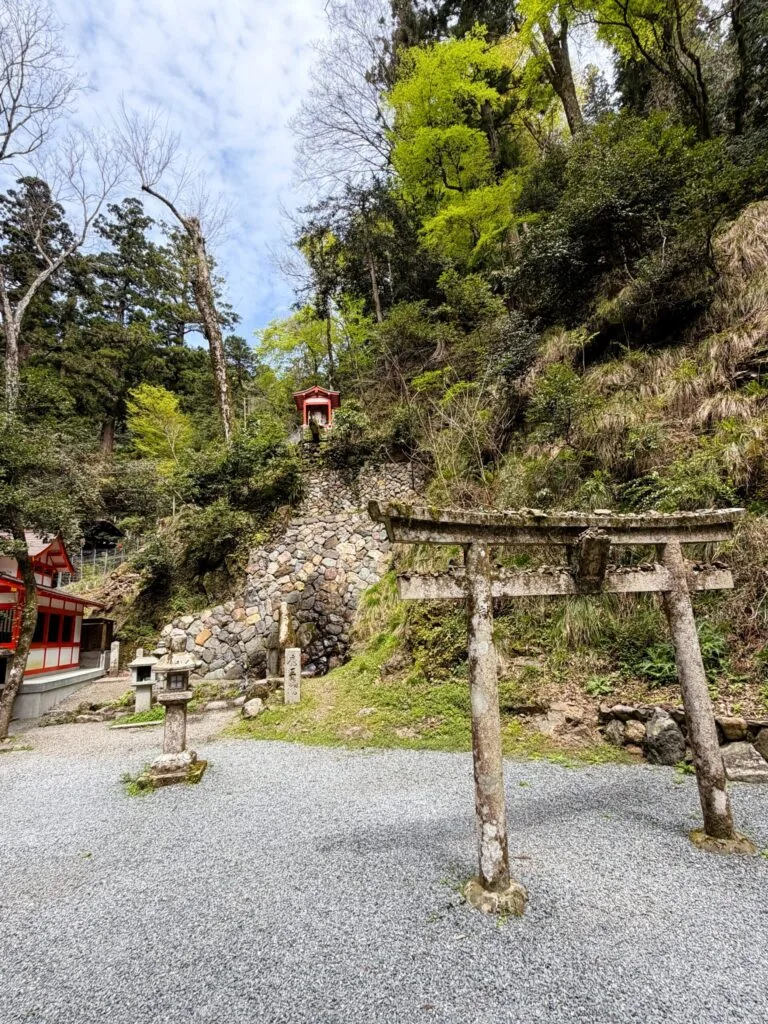
The trail grows gentler with a series of switchbacks, which begin at a memorial tower to Yoshitsune, on the site of where his modest hut once stood. This path was mentioned by Sei Shonagon in the Heian period as “a path that is far yet near, the winding path of Kurama.” It leads past a number of small stones and memorials, including the somewhat odd-looking statue embodying Sonten, the principal deity of Mount Kurama that represents the life force of the universe, cosmic energy, and universal truth.
The hiker having labored up this point will note more fresh looking walkers merging from the upper ropeway path. All, however, will have to climb the last set of steps to the temple grounds proper. Pausing midway to gaze back, one is rewarded by views of the lush views of the valley below, the village now nowhere in sight. Mount Hiei towers regally further out on the horizon, with its tell-tale mohawk haircut of aerials and mobile phone towers.
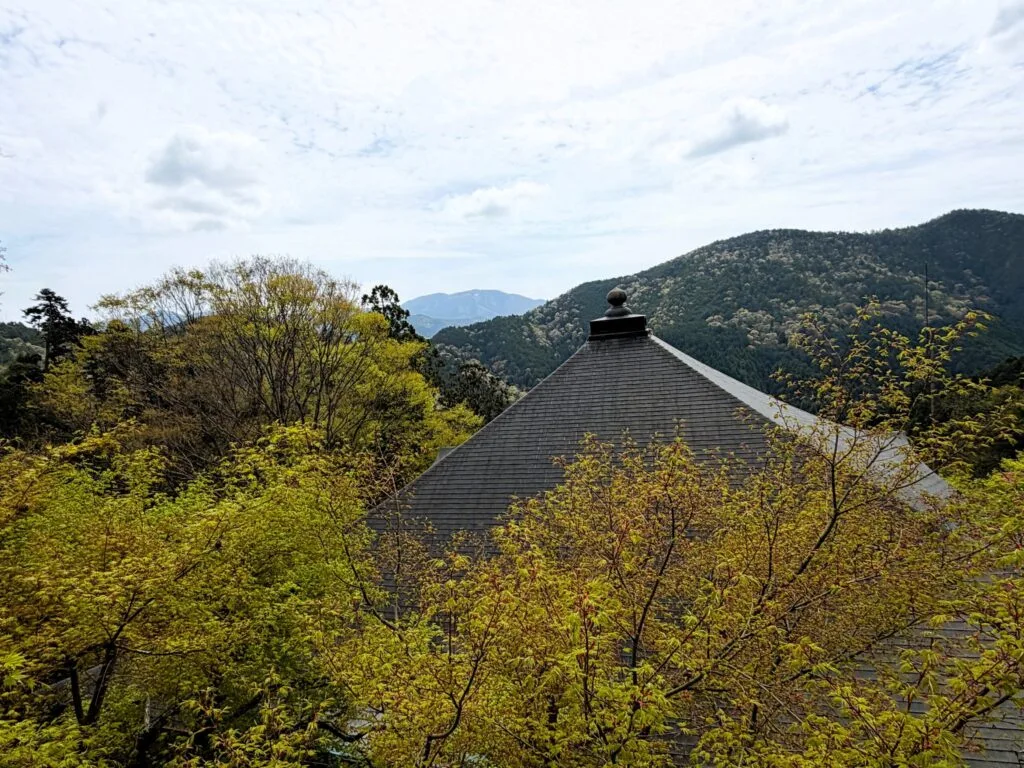
Kurama-dera was built in 770, originally as part of the Tendai sect. The founder, Gancho, had a dream which mentioned a mountain of great power, which he hoped to harness by building a temple there. Getting lost along the way, a subsequent dream of the Kibune diety revealed a white horse with an empty saddle which both led him to the mountain and gave Kurama mountain its name.
Over the centuries, the temple became an important pilgrimage site for figures both martial and literary, appearing in numerous tales. It also underwent numerous sect changes. The forceful separation of Shinto and Buddhism in the late 19th century nullified its connections to Shugendō, now banned as being too esoteric and superstitious. Subsequently made Tendai again, the Shudendō origins were eventually restored in 1949, after the latter regained its position as an important folk tradition.
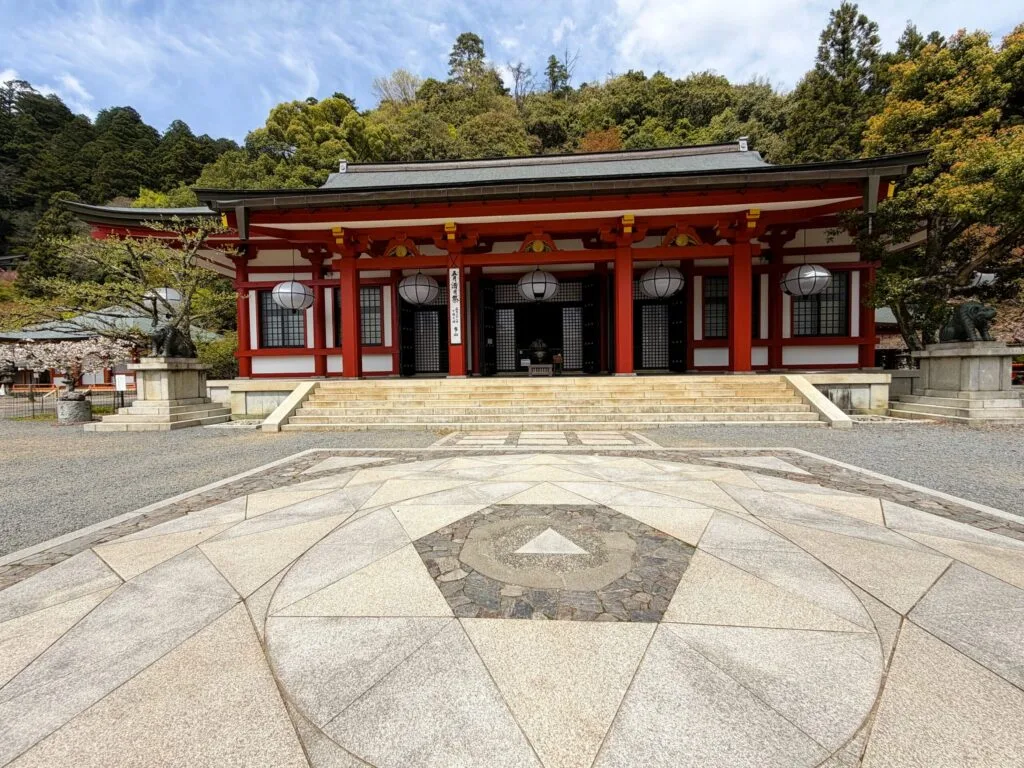
Kyoto proper is visible from the temple grounds, a tidy open courtyard broken by a handful of trees flowering on this mid-April day. The Kongo diamond mandala at the center of the courtyard is dedicated to Sonten, composed here as the trinity of Mao-son (possibly the planet Venus, an important symbol in Shingon Buddhism), Bishamonten (god of warfare), and Senju Kannon (god(dess) of compassion). Mao-son represents Power, Bishamonten represents the Sun, while the Senju Kannon represents Love.
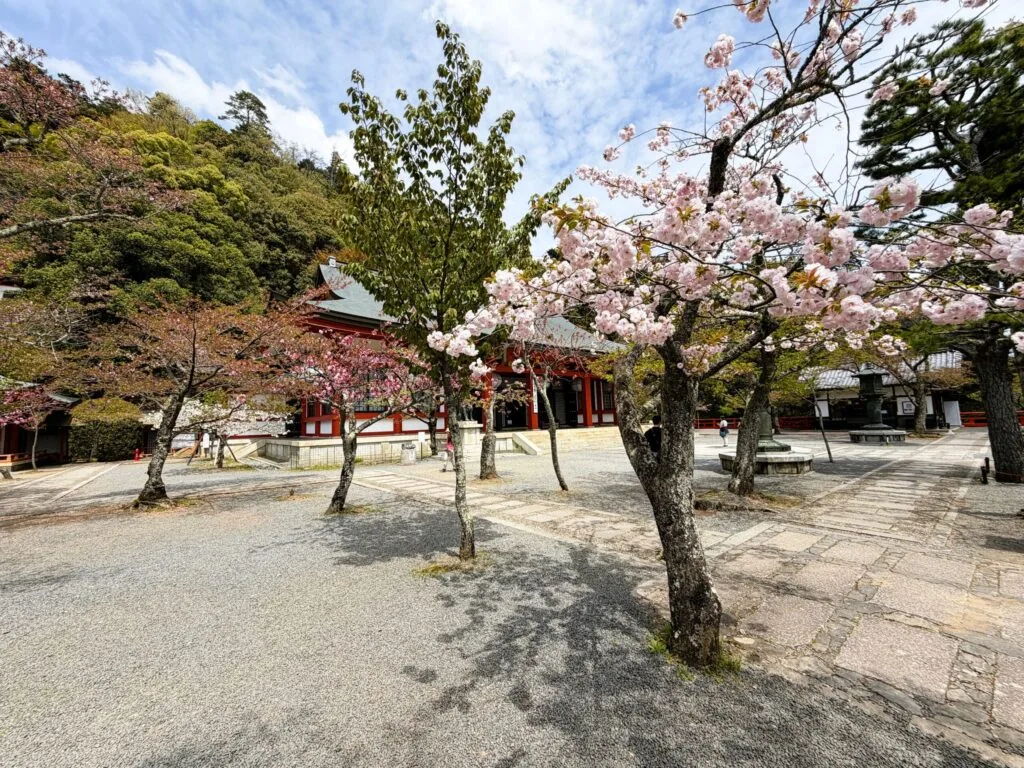
The main hall in front was rebuilt in 1971, and houses statues of these three. Legend states that Bishamonten descended on Kurama with a tiger in the Hour of the Tiger, on the Day of the Tiger, within the Month of the Tiger, which explains the paired A-Un Tigers that we passed through at the top of the steps.
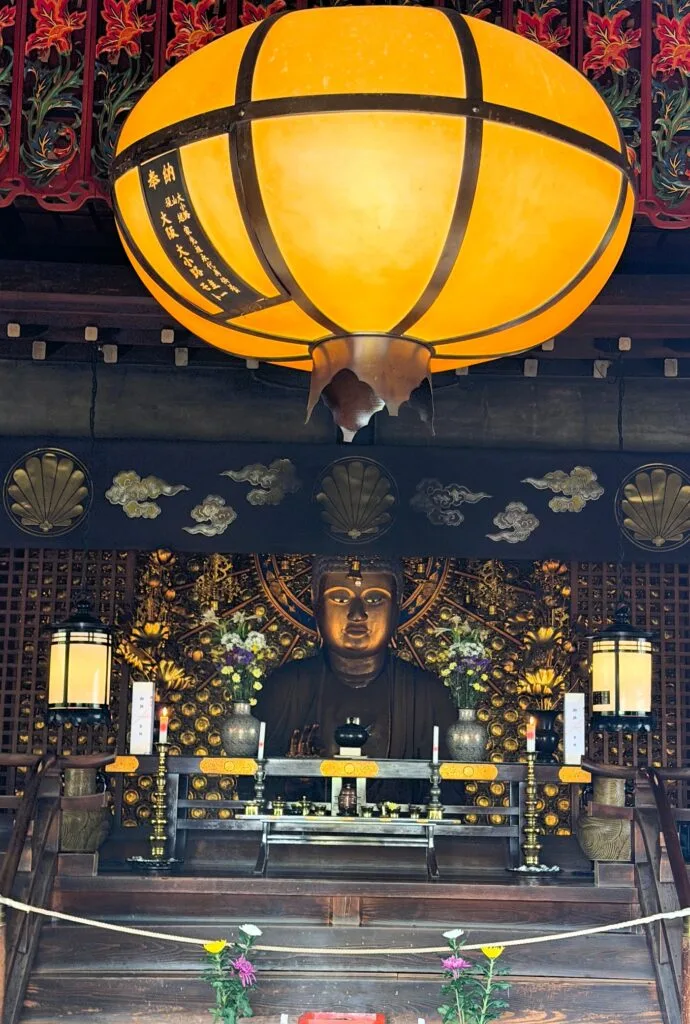
While the fire festival is generally held in the village below, the temple grounds host a few other smaller festivals during the year. The May full moon festival is better known throughout Asia as Vesak, mysteriously held here since ancient times. Now a subdued event to the public, prayers are offered for the awakening of oneself and all people, accompanied by the lighting of red candles shaped like lotus flowers (called “lights of the heart”), with pure water offered to the full moon. The more dynamic bamboo cutting festival sees Kurama monks dressed as warrior monks competing to see who is quicker to cut through thick green bamboo. The bamboo represents a giant serpent that attacked a monk Minayoshi, before laborers sent by the imperial court chopped up the serpent’s carcass and threw it into the mountains.
But on this quieter day, we’ll continue our climb to the left of the main hall, up rougher stone steps built according to the dictates of the contours of the ascent. Along the way we pass a pair of poems commemorated in stone, composed in the 20th century by Yosano Akiko and Yosano Kan, poetry teachers to one of Kurama’s head priests. Akiko’s study, Tōhaku-tei was relocated here from her home in Tokyo.
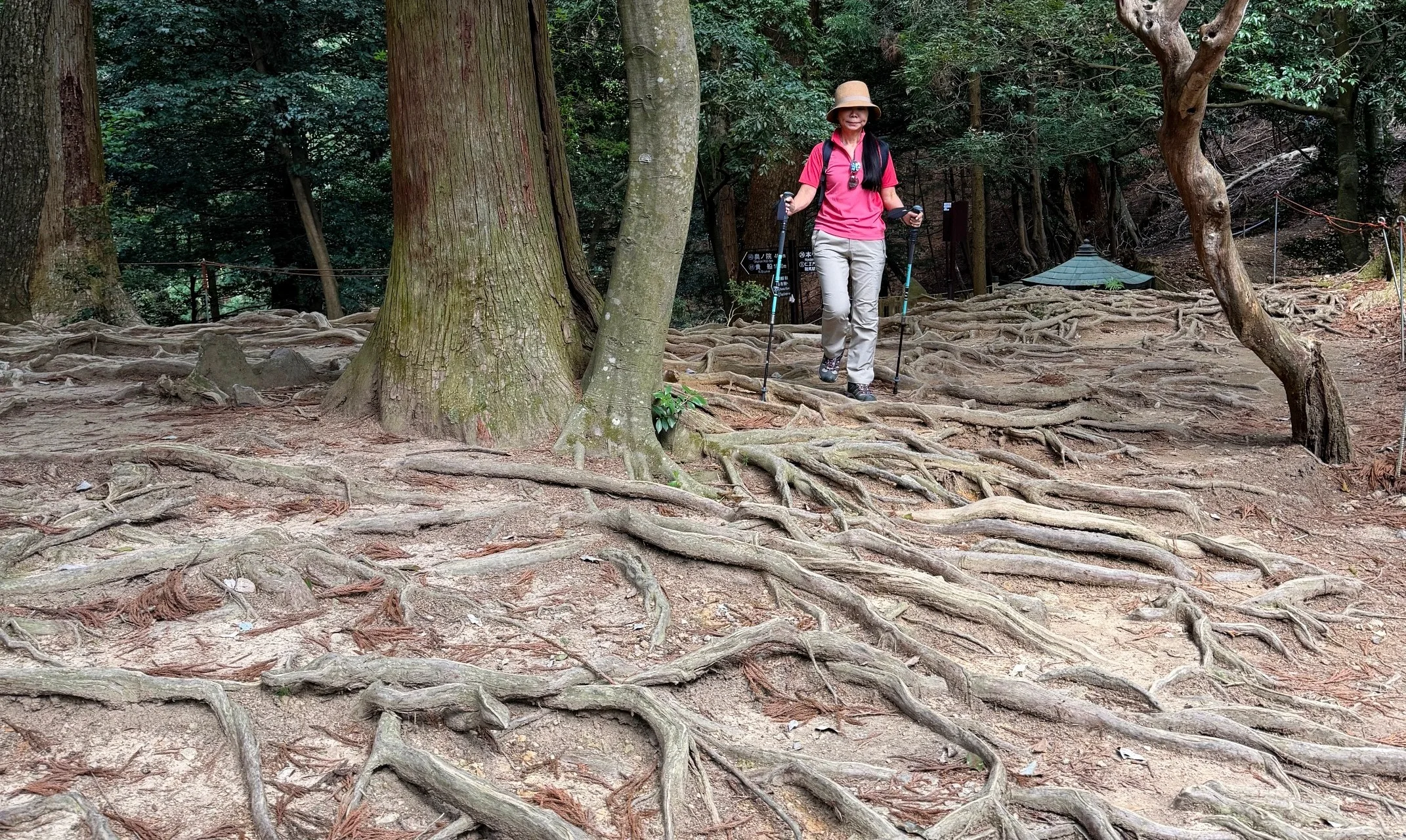
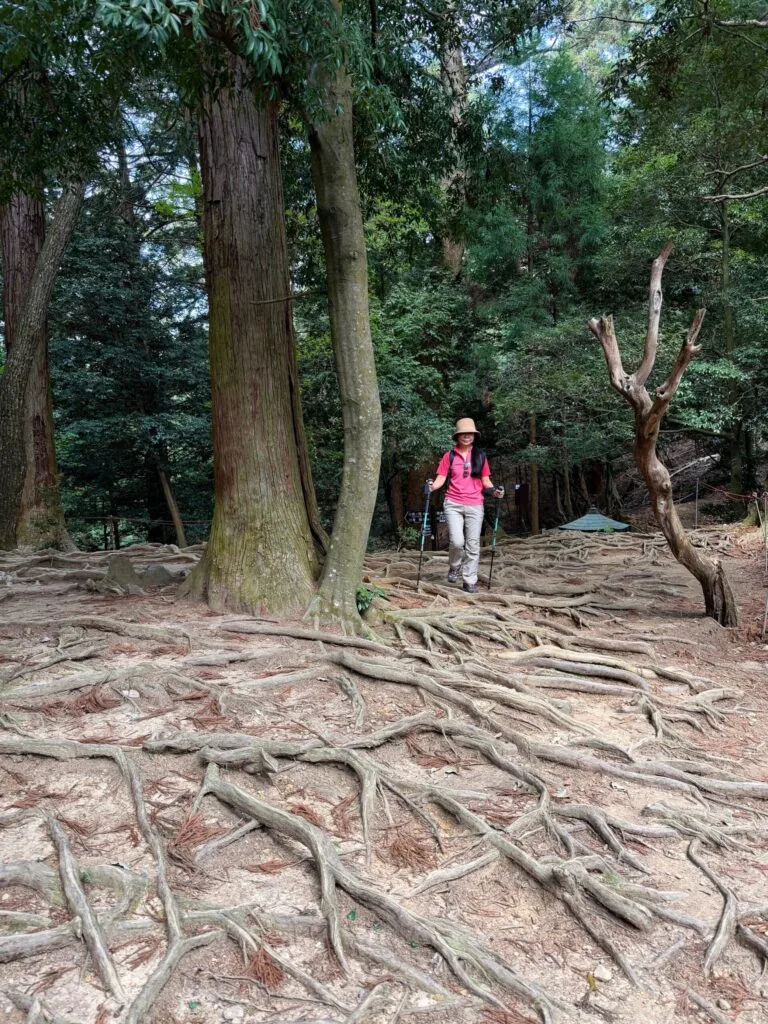
The forest where the steps finally ceases is a place of quiet beauty. Tree roots form arabesque patterns on the ground surface, the hardening of sandstone due to the intrusion of scorching magma that prevents the roots from growing under beneath the surface. These environs are seen as the source of the mountain’s power, training grounds not only to Yoshitsune, but also to Ueshiba Morihei, the founder of aikido, and Mikao Usui, founder of Reiki. There is a some sort of magnetic pull all along this ridgetop which makes it difficult to leave.
But lunch beckons. The hiker will soon come to another magical space, from which the Ōsugi Gongen Hall looms from the shadows, an atmosphere conducive to the meditation held within. Our path begins to descend sharply now, alternating between stone and packed earth. Yoshitsune lives on in the Yoshitsune-dō partway down, his spirit returning here after his death in far off Tohoku. Further along, we note that the god Mao seems the guardian of the place, ever watchful from a small altar built atop rock.
Then we pass the west gate, and arrive at Kibune. The near-namesake Kifune Jinja is just to the right, up a picturesque set of stone steps.
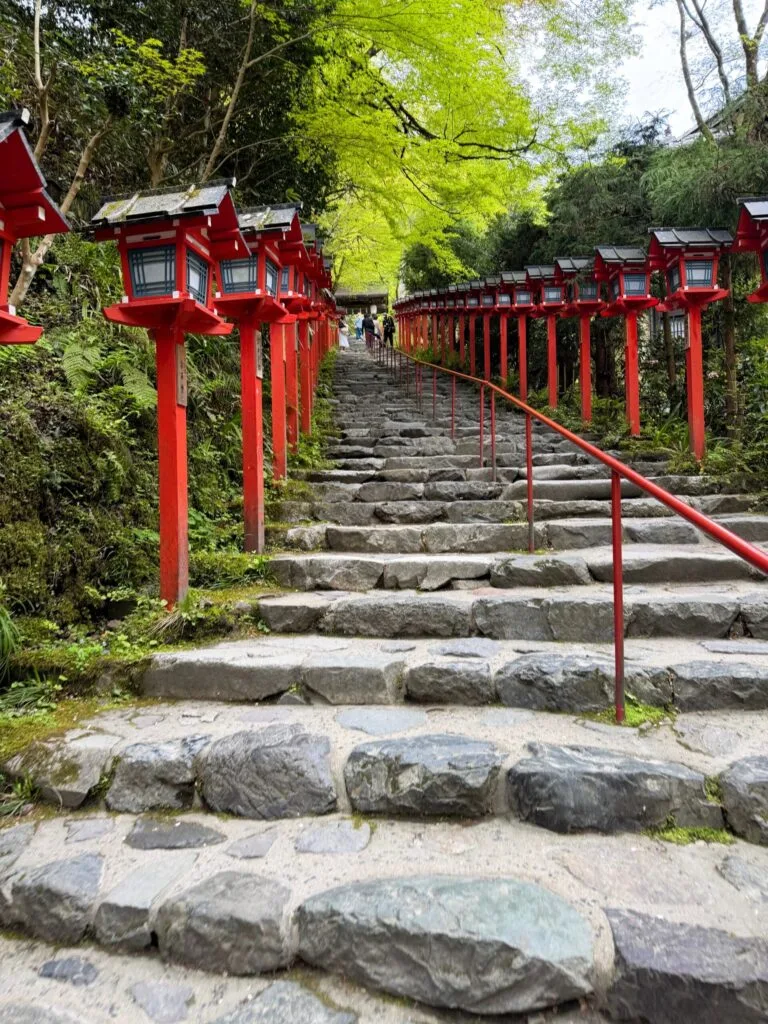
The shrine appears in both the ancient Kojiki and Nihon Shoki texts, and during the later Heian period was patronized by the Imperial family, with imperial messengers reporting to the gods any important events happening in the old capital. Through history it was also associated with Ushi no toki mairi, where women scorned could place curses upon those who wronged them. (In the modern version, the effigy of a straw doll is impaled to a tree with a nail.) Any sort of bad mojo is hard to image in the serene confines of Kifune Okunomiya, fifteen minutes further along the river to the north. Although deifying Takaokami, the god of water, it is hard to pull your attention from the magnificence of the trees surrounding the site.
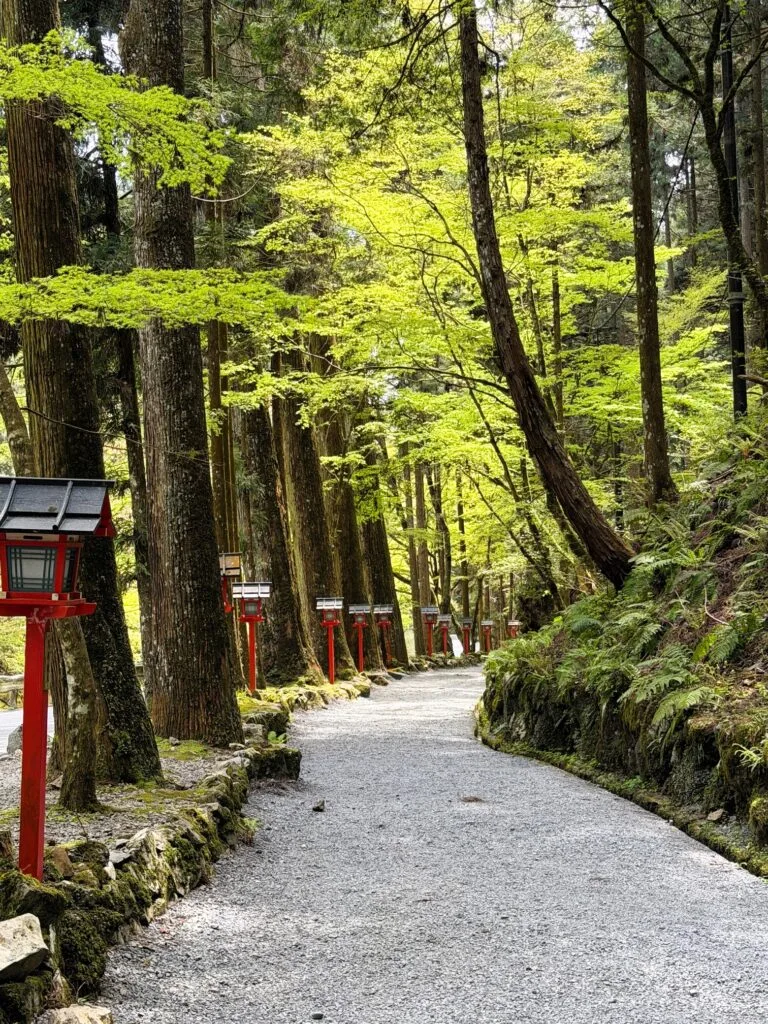
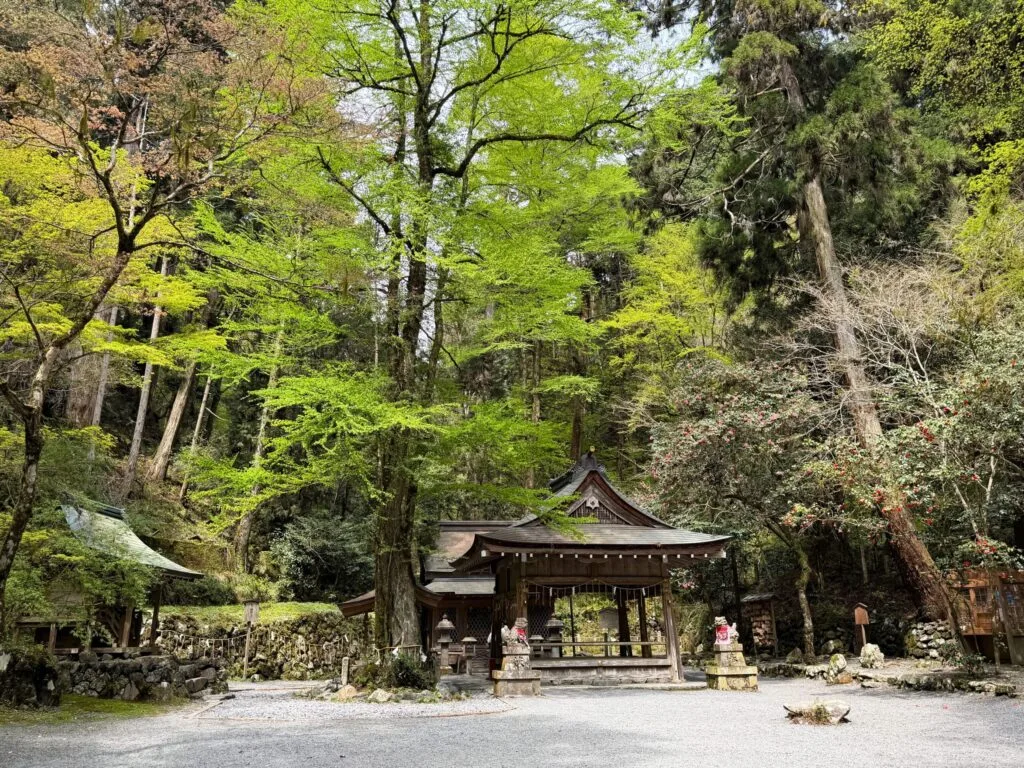
Our supplications now complete, we turn and follow the river back south to the village. Vegetation characteristic of both the Sea of Japan and the Pacific Ocean coexist in this narrow Kibune River basin. The valley was once known as a “treasure trove of insects,” but the increase in cars and tourist buses has no doubt changed that. Happily, fireflies can still be seen in the surrounding area during the summer.
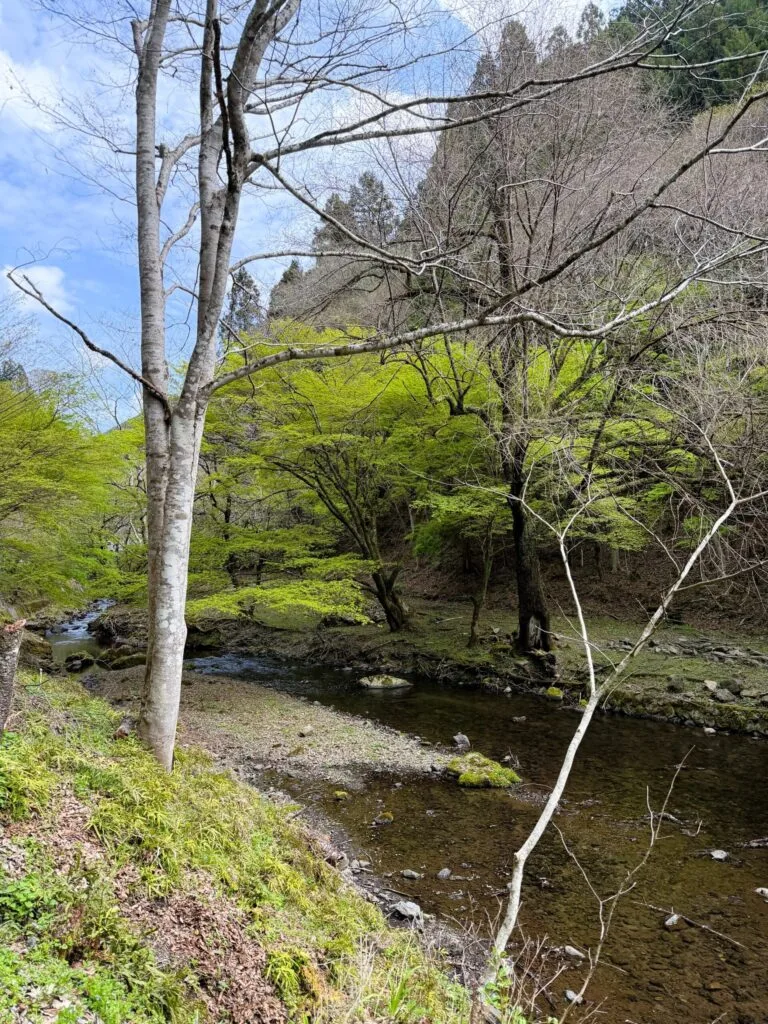
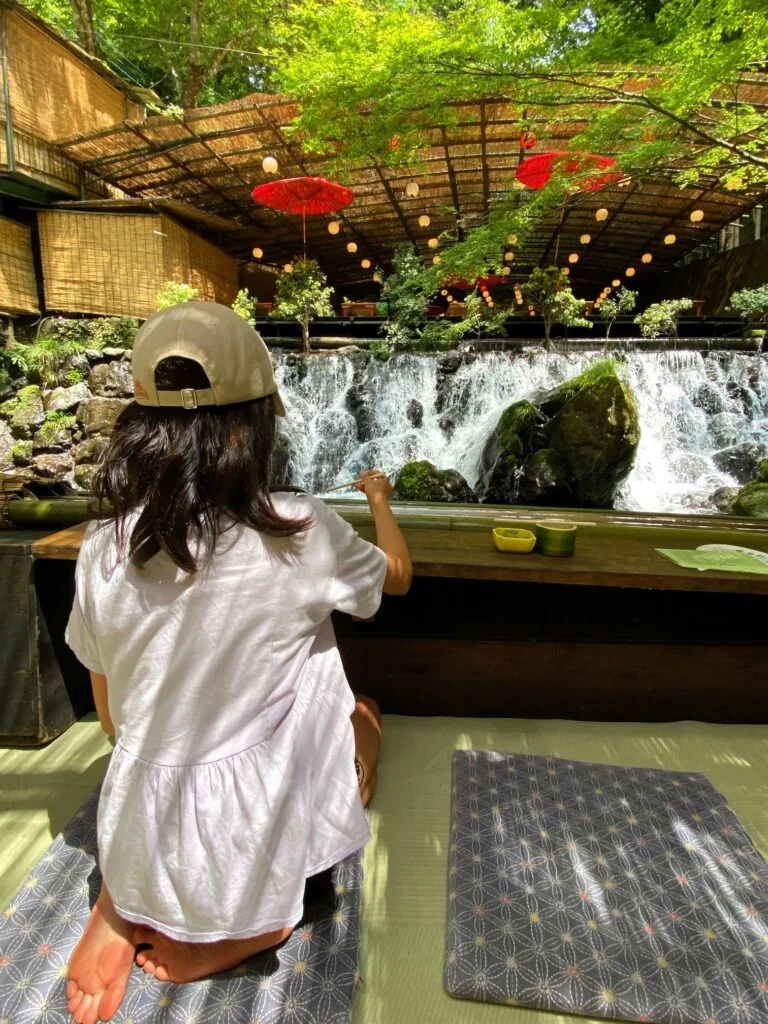
We too can flit above the waters here in the form of kawaboko dining, held between June and September. Sitting atop purpose-built dining platforms a few meters above the river, the diner enjoys the cool rising from below.
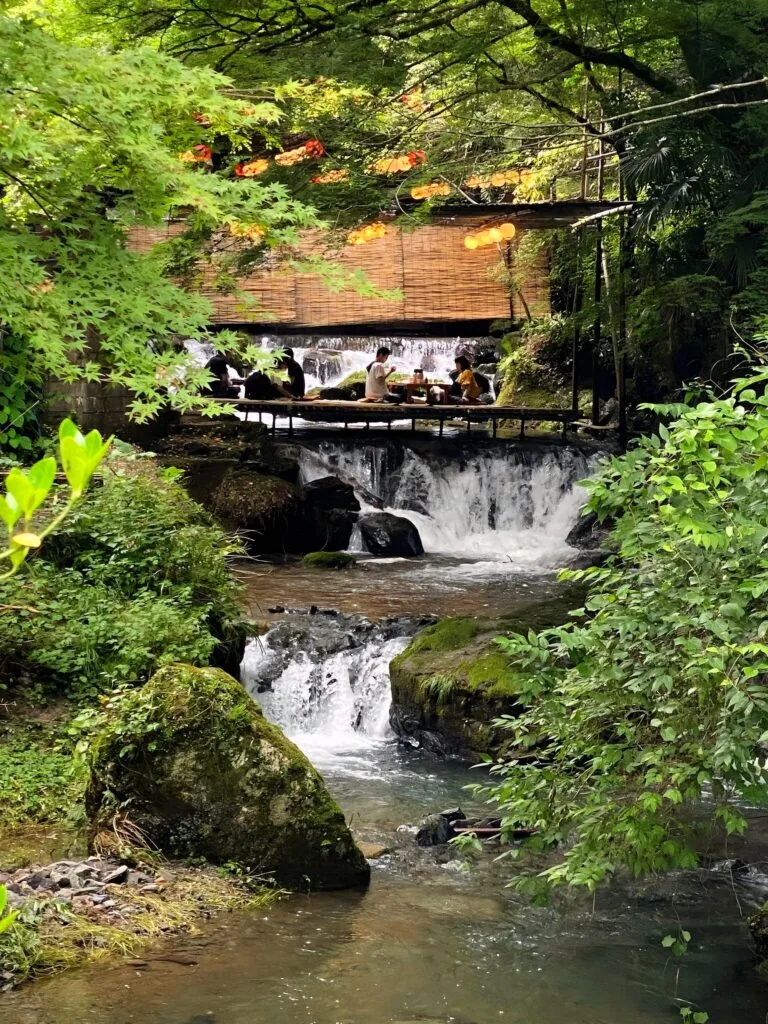
A personal favorite is nagashi somen, where one deftly wields chopsticks to grab strands of somen noodles that shoot rapidly along lengths of cut bamboo. There are also plenty of restaurants and inns along the way. For some, an overnight here promises a sleep accompanied by the lullaby of the water god passing gently by.
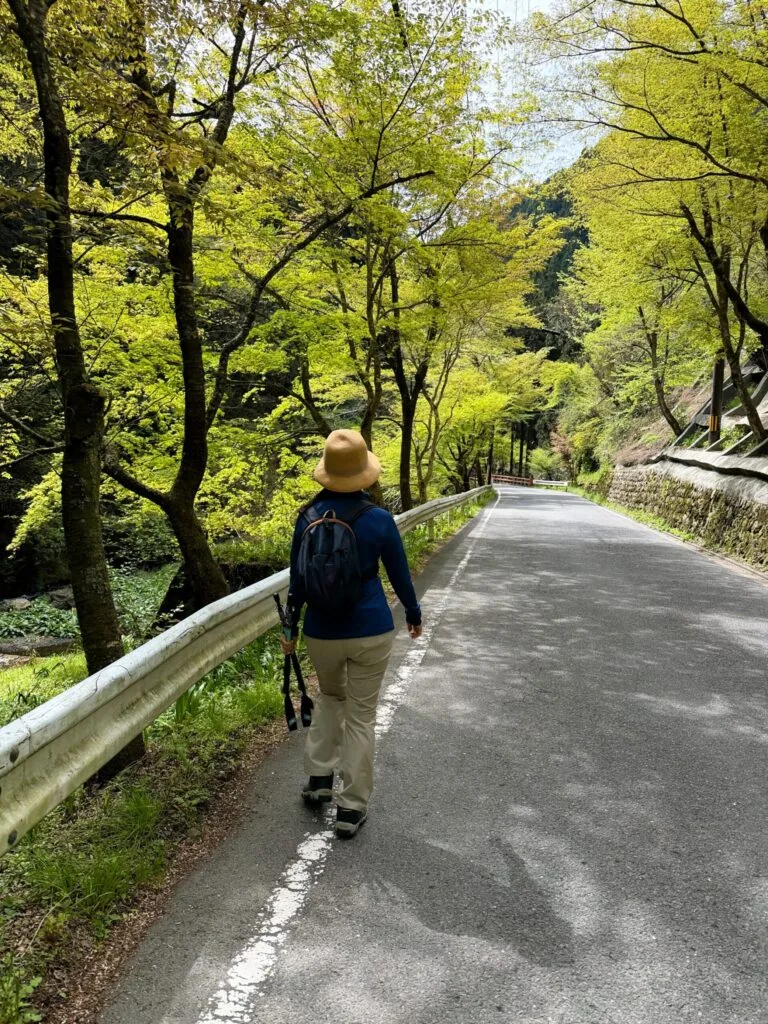
For we daytrippers, the hour is still early. We can extend our pleasant walk for an additional half hour down the maple-shaded river down to the train line. However the road is narrow, and if the day busy, traffic will inevitably interfere with our enjoyment of nature. Better to board one of the frequent buses for the short trip down to the Eizan line, which will wend back down through the hills toward the awaiting Kyoto.